R&D KOSÉ Discovers Inhibitory Effects of “Citrus Aurantium Tachibana Peel Extract” on Melanin Production and Transfer 2026.04.24 Show Full [ PDF / 308KB ]
KOSÉ Corporation (Tokyo, Japan) has discovered that “Citrus Aurantium Tachibana Peel Extract”, derived from the mature peel of the Citrus Tachibana fruit, has a dual inhibitory effect on melanin production and transfer. Specifically, the research revealed two key mechanisms: the suppression of melanocyte activation mediated by epidermal cells, and the inhibition of melanin uptake by epidermal cells from melanocytes. A part of these findings was presented at the 146th Annual Meeting of the Pharmaceutical Society of Japan (March 26–29, 2026).
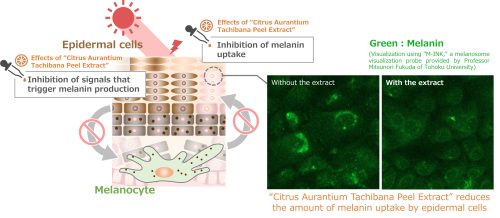
Fig.1 Mechanism of inhibition of age spot formation and melanin uptake suppression
by Citrus Aurantium Tachibana Peel Extract
Background
Age spots (pigmentation) that appear with age are a primary skin concern for many. These age spots are formed when melanocytes, activated by stimuli such as UV rays, produce excessive melanin. This melanin is then taken up and accumulated by epidermal cells near the skin surface. Consequently, the interaction (crosstalk) between the melanin-producing melanocytes and the melanin-receiving epidermal cells is a critical factor in age spot formation.
While dried mature citrus peel (known as Tachibana or Chinpi) has been recognized for its ability to suppress the direct activation of melanocytes, its specific role in the interaction between melanocytes and epidermal cells remained unclear. This study sought to elucidate the comprehensive mechanism by which Tachibana Peel Extract inhibits age spot formation.
Suppression of Melanocyte Activation by Epidermal Cells
Melanin is produced in melanocytes located deep within the skin. When epidermal cells enter an inflammatory state, they increase the production of SCF (Stem Cell Factor), a protein that signals melanocytes to produce melanin.
Given that “Citrus Aurantium Tachibana Peel Extract” is known to have anti-inflammatory properties, we investigated its impact on SCF production. The results demonstrated that treatment of epidermal cells with the extract significantly reduced both the intracellular production and extracellular release of SCF.
Furthermore, to investigate the impact on melanocytes, we treated melanocytes with a culture medium containing factors released from these epidermal cells. The study confirmed a significant decrease in the activity of tyrosinase—the primary enzyme involved in melanin production—compared to the control group (Fig.2). These results indicate that Citrus Aurantium Tachibana Peel Extract” prevents age spot formation by acting on epidermal cells to suppress the release of melanocyte-stimulating factors.
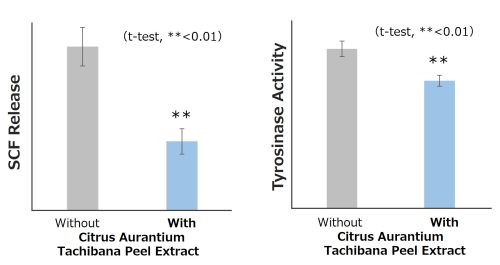
Fig.2 Reduction in SCF release and tyrosinase activity following treatment
with Citrus Aurantium Tachibana Peel Extract
Inhibition of Melanin Uptake by Epidermal Cells
Another key mechanism in age spot formation is the process by which epidermal cells receive and internalize melanin produced by melanocytes. This uptake is promoted by a protein called PAR2 (Protease-Activated Receptor 2). PAR2 is also expressed in the areas surrounding existing age spots and can be a factor in their expansion.
We investigated how “Citrus Aurantium Tachibana Peel Extract” affects PAR2 production and the subsequent uptake of melanin. The results showed that the extract suppressed the production of PAR2 in epidermal cells. Furthermore, when melanin and the extract were added to epidermal cells, the amount of melanin taken up by the cells was significantly reduced compared to the untreated group (Fig.1 and 3). This demonstrates that the extract can help inhibit the “spread” of age spots by suppressing PAR2 and reducing melanin uptake.
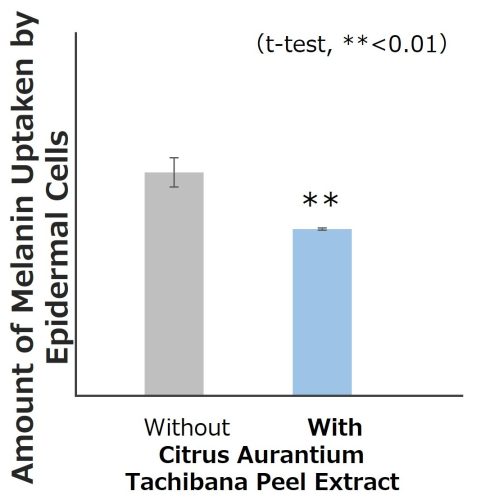
Fig.3 Reduction in melanin uptake by epidermal cells following treatment
with Citrus Aurantium Tachibana Peel Extract
The study concludes that “Citrus Aurantium Tachibana Peel Extract” provides a multi-faceted approach to age spot prevention by:
・Reducing SCF release from epidermal cells to suppress melanocyte activation.
・Inhibiting PAR2 production to prevent melanin uptake by epidermal cells.
Future Outlook
This research has revealed that “Citrus Aurantium Tachibana Peel Extract” prevents the accumulation of melanin in epidermal cells caused by its production and transfer. KOSÉ remains committed to uncovering the mechanisms behind various skin concerns and developing innovative ingredients.
Share