Corporate Governance
- Governance Highlights
- Basic Policy
- Corporate Governance Structure
-
Leadership & Skills Matrix
-
Succession Plan
(Selection and Development Policy for Executive Management) -
Evaluation of the Effectiveness of the Board of Directors
-
Officer Remuneration
-
Risk Management
-
Basic Policy on Internal
Control Systems
Click here to download Corporate Governance Report
Governance Highlights
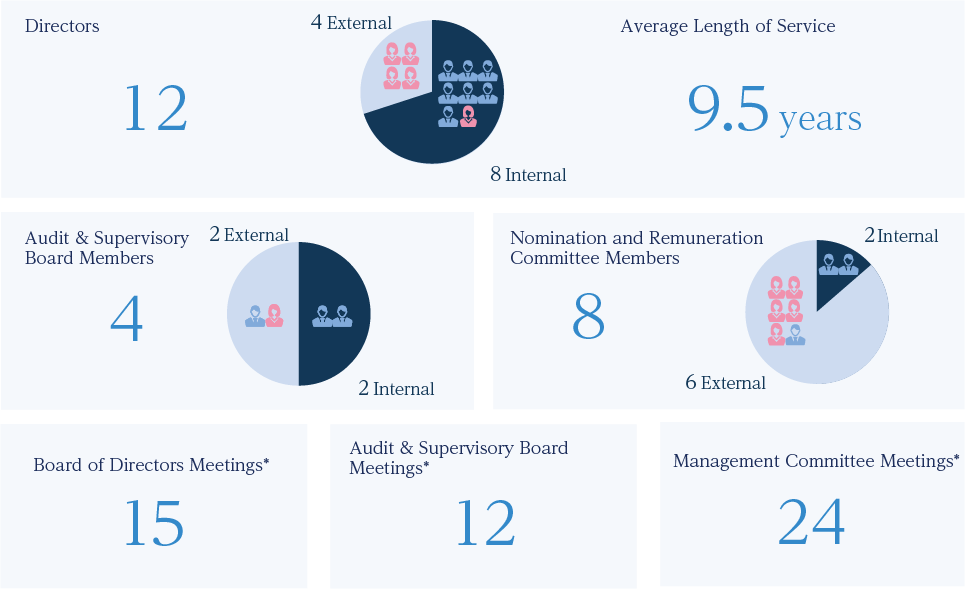
Basic Policy
The nucleus of the management policy of the KOSÉ Group (the “Group”) is “consistently managing to heighten corporate value” by pursuing growth and greater efficiency. The Group recognizes corporate governance functions as essential from the standpoint of managing the Group to consistently increase its enterprise value, and positions corporate governance as one of its highest management priorities.
Accordingly, the Group is working on establishing the necessary organizational systems and frameworks to ensure sound management and consistently earn the trust of society.
KOSÉ Holdings Corporation (the “Company”) believes strongly in managing the Group so as to maintain harmonious relations with all stakeholders, including shareholders, investors, creditors, customers, business partners, employees and communities. Furthermore, the Company is committed to enhancing transparency and fairness to earn the support as a company with value. The Company strives to communicate sincerely with its stakeholders and considers building trust-based relationships to be fundamental.
Corporate Governance Structure
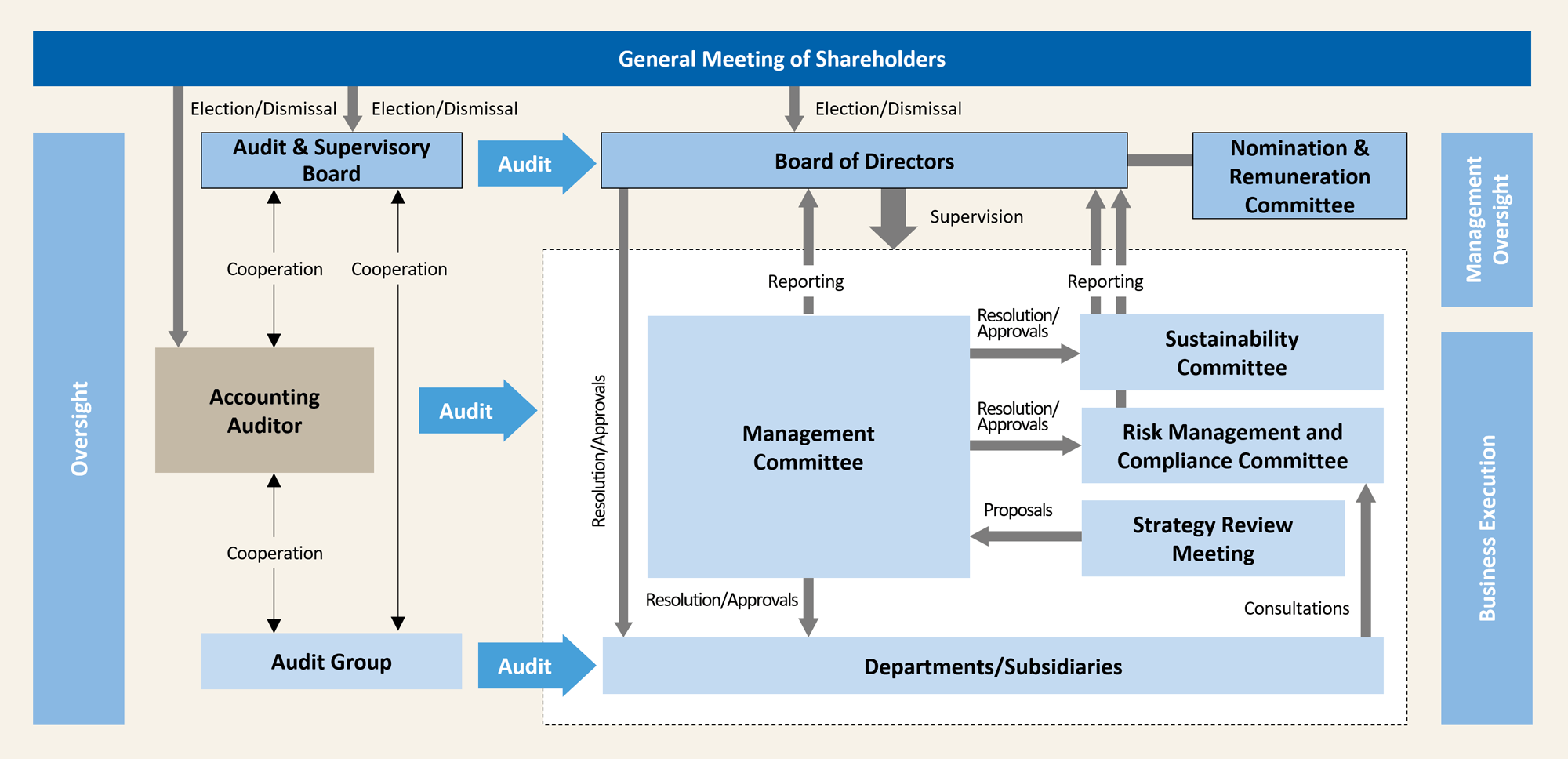
As a holding company, its Board of Directors is responsible solely for determining basic policies for the management of the entire Group and overseeing the implementation of these policies. The oversight role of Directors includes defining the Group strategies, optimizing resource allocation, risk management, and other key management priorities. Each department executes operations in accordance with its clearly defined roles and responsibilities to ensure effective business management. The general managers of these departments are delegated authority for business execution, enabling rapid decision-making and enhanced operational efficiency.
Furthermore, to deliberate important management-related matters and provide overall control over the execution of business, the Company has established a Management Committee, which is chaired by a Representative Director and composed mainly of Directors with specific titles. In addition, for swift and efficient management, the Company holds Executive Committee and other relevant meetings as necessary, for sharing information on daily business execution.
The Company has adopted the Company with an Audit & Supervisory Board system and conducts audits to ensure the appropriateness of Directors' execution of duties.
In addition, the Company has a Nomination & Remuneration Committee where the majority of members are Independent External Directors and Audit & Supervisory Board Members. This committee holds discussions about the suitability of the remuneration and selection of executives.
Furthermore, coupled with a system of mutual supervision by business-savvy executives, the Company judges that this system of employing Independent External Directors/Audit & Supervisory Board Members to fulfill auditing and supervisory functions is appropriate, given the content and scale of the Company’s business.
Board of Directors
The Company strives to ensure that the Board of Directors has an optimal balance of knowledge, experience, and skills, as well as a size that is appropriate for the Company. The Board is also expected to reflect diversity, with the Company making no distinctions based on characteristics such as nationality or gender in the selection of members. The Company has appointed External Directors with a high level of expertise and extensive insight to provide advice on business execution, as well as to monitor and supervise each Director.
The Board of Directors properly oversees the business execution of all departments with the goals of the consistent growth of the entire Group and the enhancement of corporate governance. In principle, it meets once each month to decide on matters provided in laws and regulations and the Articles of Incorporation and important management-related matters, as well as to supervise the execution of duties by Directors of subsidiaries. Directors are formally elected individually within the resolution at the General Meeting of Shareholders.
Audit & Supervisory Board
The Audit & Supervisory Board oversees the Board of Directors and audits the business execution of important meetings. The Board consists of internal Audit & Supervisory Board Members who have a deep understanding of the Company's business processes and organizational structure, as well as an attorney and a certified public accountant with advanced expertise and extensive knowledge appointed as External Audit & Supervisory Board Members. Audit & Supervisory Board Members regularly participate in important meetings such as Board of Directors meetings, coordinate with Audit & Supervisory Board Members of domestic group companies, exchange information and opinions with internal audit departments and the accounting auditor, and regularly conduct audits of internal departments and subsidiaries.
Nomination & Remuneration Committee
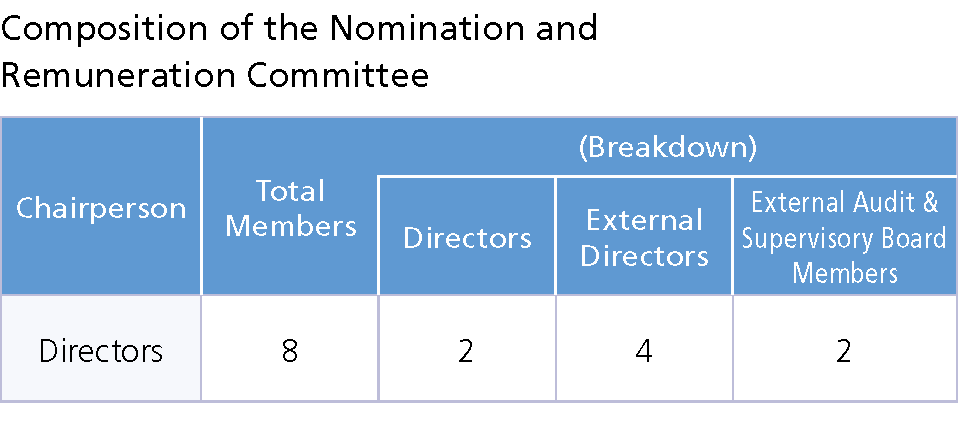
The Nomination & Remuneration Committee examines proposals concerning nominations, remuneration and other matters that are submitted by the Representative Director and President to the Board of Directors. This committee exists for the purpose of reinforcing the independence, objectivity and accountability of activities by the Board of Directors concerning nominations, remuneration and other matters involving the Directors and Audit & Supervisory Board Members. The committee is chaired by an Independent External Director to ensure objectivity.
Risk Management and Compliance Committee
For the Group, “compliance” encompasses compliance with laws and regulations as well as behavior consistent with social ethics based on our code of conduct, “Mind to follow the right path.” This scope of compliance includes adherence to ethical behavior as defined in the KOSÉ Group Action Guidelines.
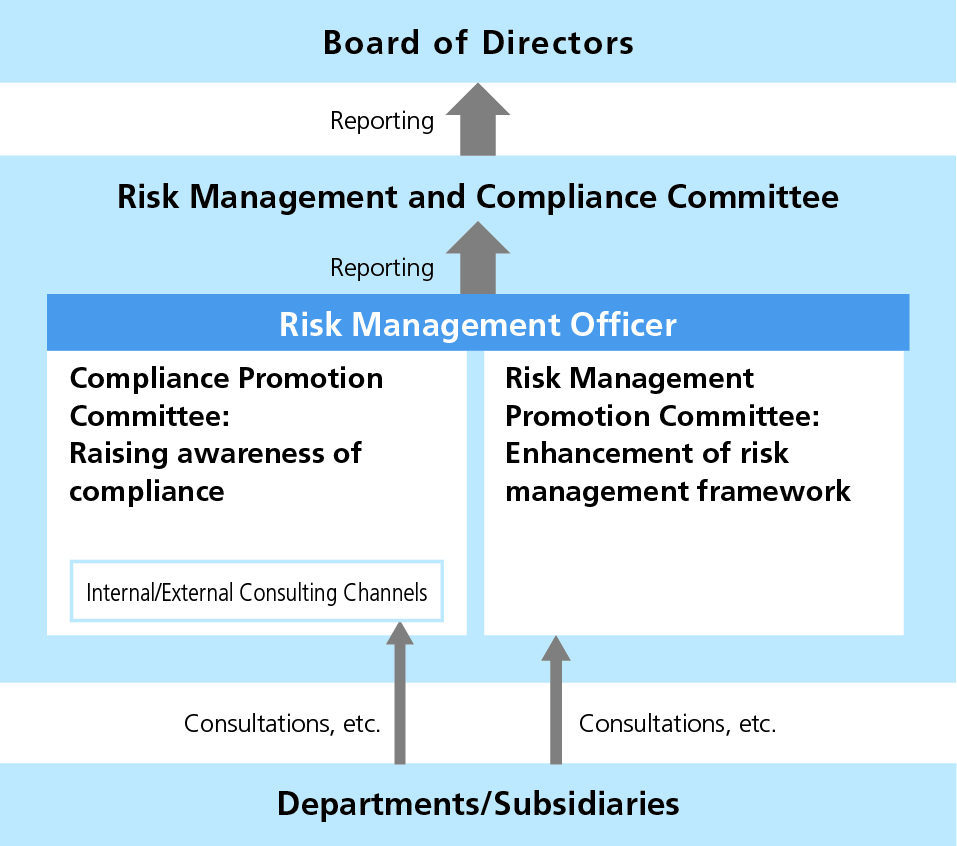
The compliance structure and compliance activities are based on Risk Management and Compliance Regulations. To ensure effective oversight, compliance-related activities are reported regularly to the Board of Directors for thorough review and discussions. Reports are submitted by the Risk Management and Compliance Committee, which is chaired by the Representative Director and President and consists mainly of individuals who manage business units. Risks are reviewed at least once a year.
In addition, the Compliance Promotion Committee holds seminars and other training programs for Directors and employees. Compliance is monitored through a system for managing reports and consultations, with both internal and external consultation channels available. Furthermore, There are many sources of risk that pose a threat to the sustainable development, particularly problems involving compliance, product quality, information security, markets, natural disasters and other potential risks. To be prepared to respond to these problems, the Company has an effective risk management framework that includes Risk Management and Compliance Regulations and a Risk Management Promotion Committee.
The General Manager of the General Administration Group, who chairs the Risk Management Promotion Committee, designates business units that are risk owners based on the significance of individual risk factors.
These units are responsible for determining countermeasures for these risk factors, monitoring these measures and submitting periodic reports to the Risk Management Promotion Committee, which consists primarily of individuals who manage business units.
The Company has established a framework based on the Crisis Management Regulations for minimizing as much as possible, the damages and other losses that may arise in the event of a significant crisis or other issues.
The Sustainability Committee
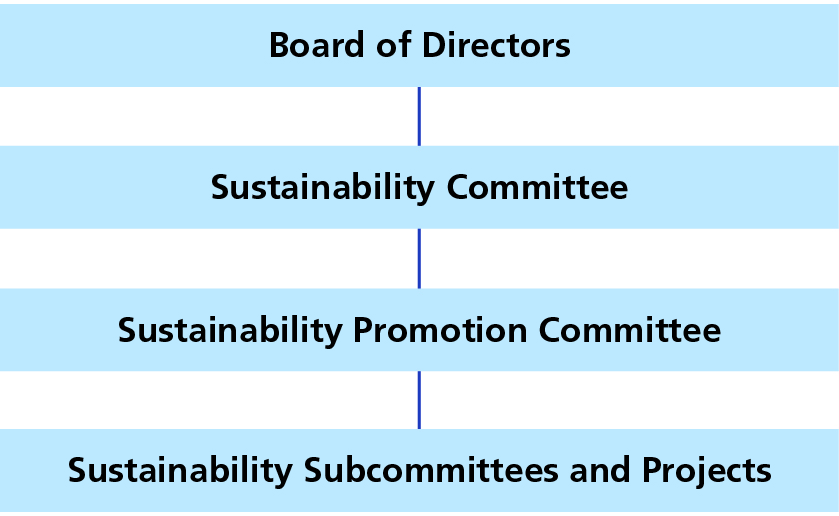
The Group recognizes sustainability-related challenges as key management priorities and has established a framework to drive relevant initiatives. Specifically, the Sustainability Committee, which is chaired by the Representative Director and President, submits sustainability strategy proposals to the Management Committee. If this strategy proposal is approved by the committee, it is reported to the Board of Directors. The Board of Directors is responsible for overseeing the company's overall sustainability promotion activities by reporting and deliberating on various important issues related to sustainability strategies. The President, who chairs the committee, is also responsible for assessing and monitoring risks and opportunities related to climate change issues. These issues are reported and discussed at the Board of Directors meeting at least twice a year, and efforts are reviewed. In addition, based on the Group’s Sustainability Strategy, the Sustainability Promotion Committee has established subcommittees and projects for each individual theme to promote activities that are highly effective as cross-departmental initiatives.
Leadership & Skills Matrix
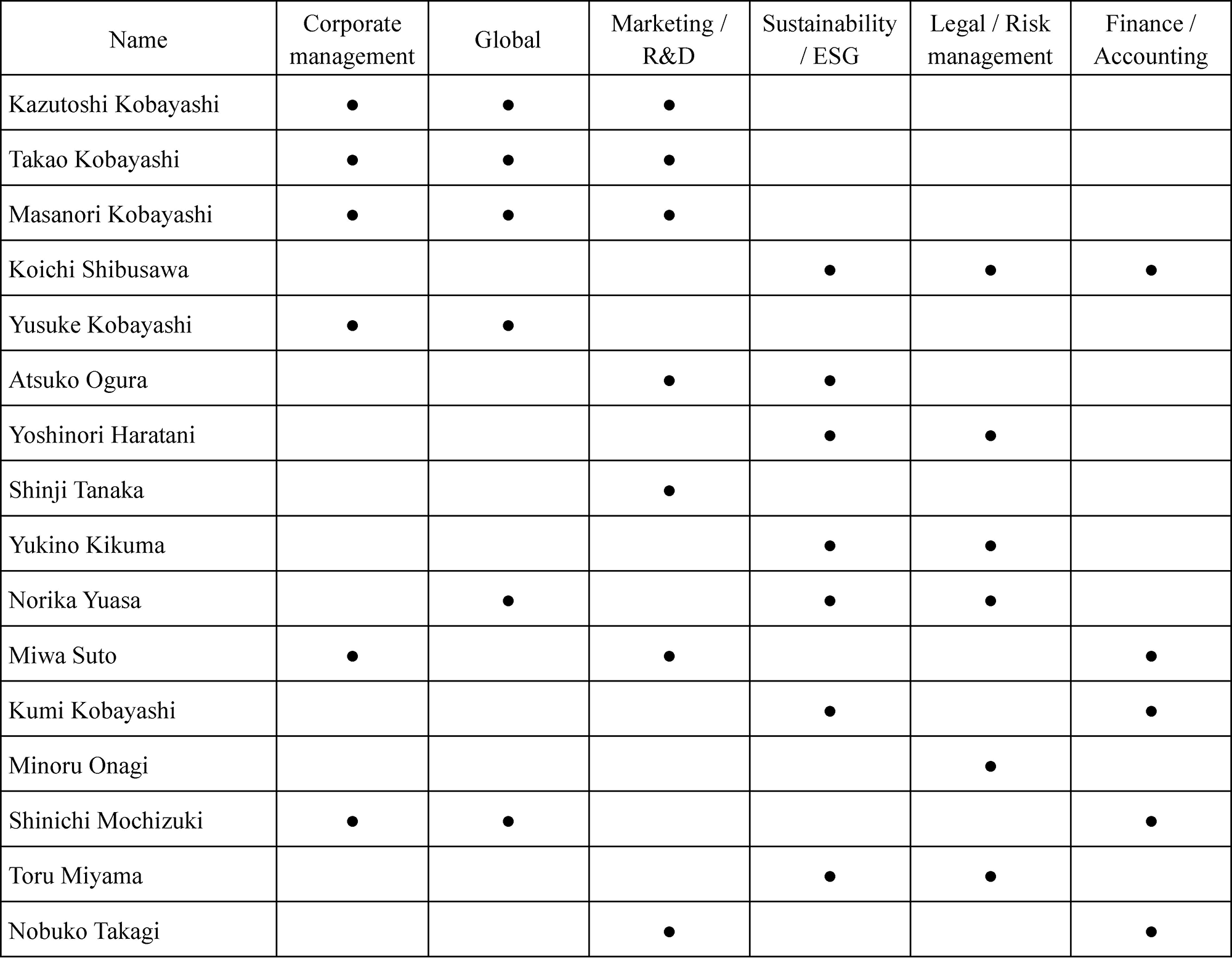
Succession Plan (Selection and Development Policy for Executive Management)
-
Policy on the appointment/dismissal of Executive Management, and the Nomination of Candidates for Directors and Audit & Supervisory Board Members
The Company considers the development of future executive leadership to be one of its key priorities in achieving sustainable growth and strengthening competitiveness. In order to drive global business growth, leaders must understand diverse and rapidly changing markets and possess the ability to solve problems unconstrained by convention. Executive management, who are responsible for critical decision-making, must be capable of responding flexibly to changes in the business environment and making sound judgments. To ensure the strategic and continuous development of successors, we have clarified the qualifications required for executive roles, selected candidates from a long-term perspective, and are promoting a structured and deliberate approach to leadership development.
-
Required Qualifications
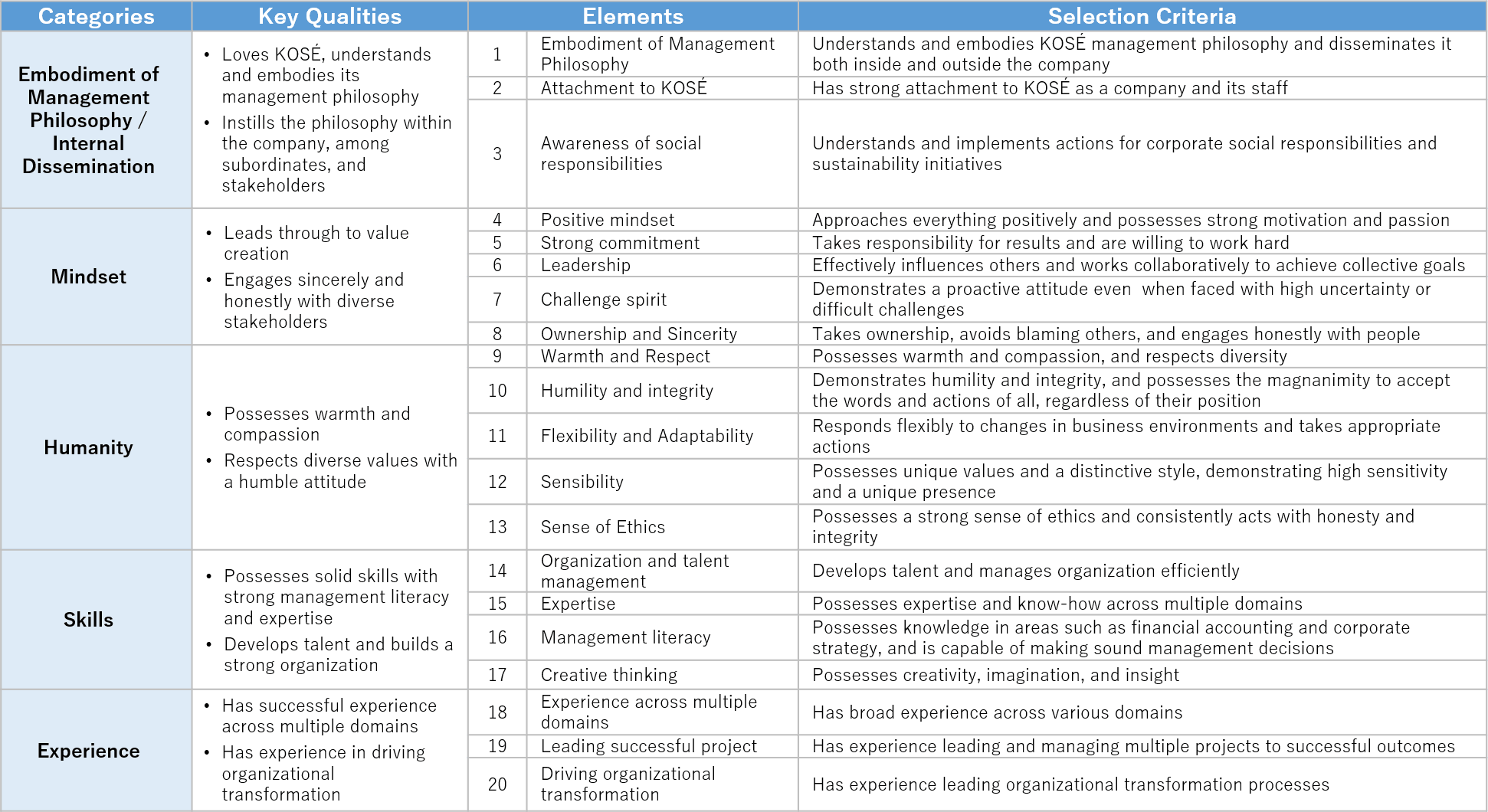
When appointing and dismissing Executive Management and nominating candidates for Directors and Audit & Supervisory Board Members, we comprehensively assess qualities such as their ability to instill the corporate philosophy across generations, strong cohesive power, execution capabilities, character, career background, and competency. We have defined five key categories of qualities and competencies required of executive leaders. Through a wide range of professional experiences, individuals are expected to develop these attributes and become capable of navigating an evolving business environment.
![]()
-
Selecting Process
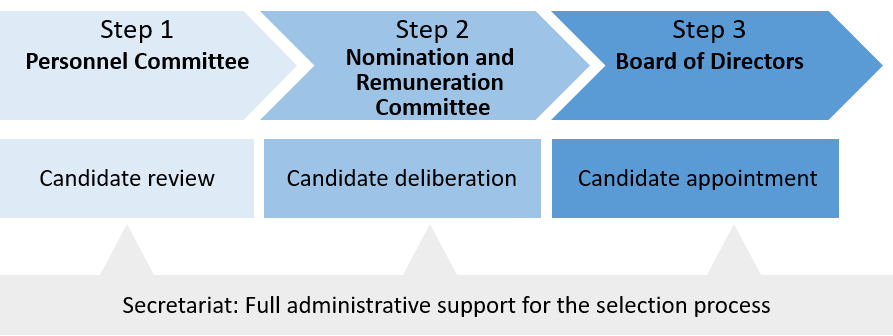
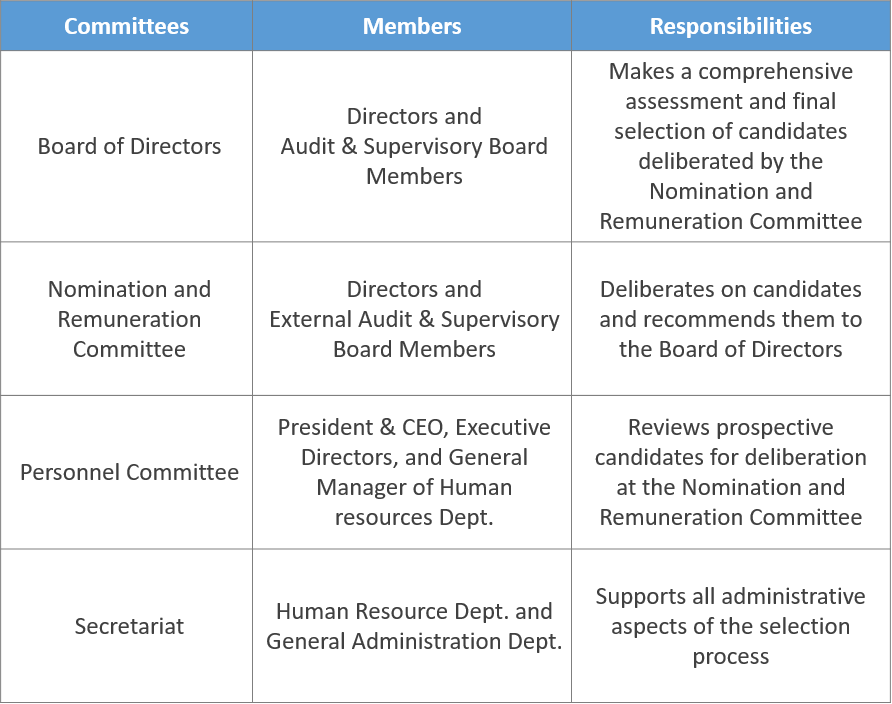
As for the procedures in appointments and dismissals of Executive Management and nominations of candidates for Directors and Audit & Supervisory Board Members, Executive Management drafts proposals in the Personnel Committee and submits them to the Nomination & Remuneration Committee, which is chaired by an Independent External Director and whose majority of members are Independent External Directors and Audit & Supervisory Board Members. Following the deliberation, the proposals are submitted to the Board of Directors for a comprehensive assessment and final decision. The reasons for each appointment or dismissal of Director and Audit & Supervisory Board Member candidates are detailed in the reference materials of the Notice for the General Meeting of Shareholders.
![]()
![]()
-
Development and Support
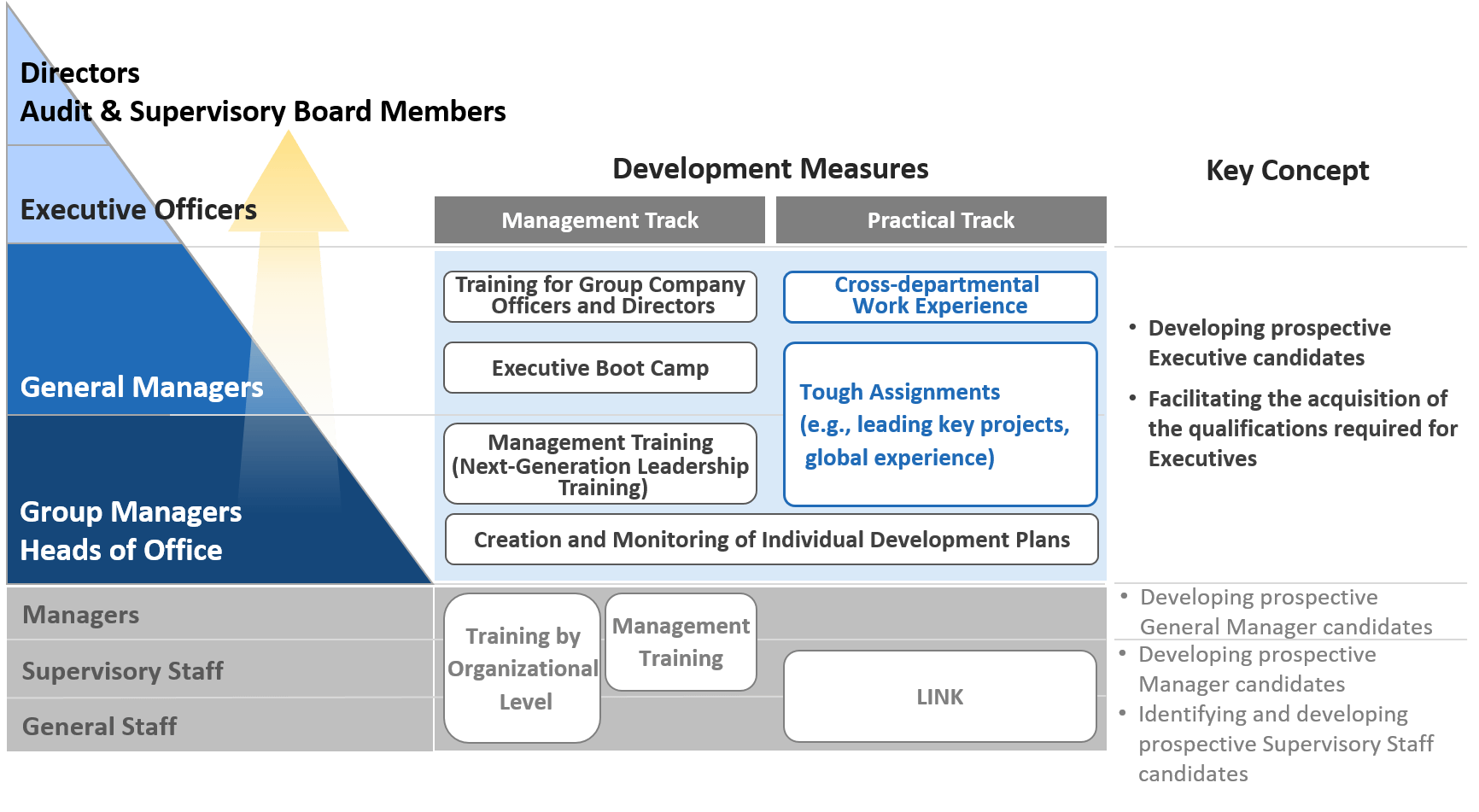
Assuming the core quality of embodying the Company‘s management philosophy has already been acquired, we develop prospective General Manager-level candidates, who are future executive leaders, through both managerial and practical approaches to cultivate their mindset, humanity, skills, and experience.
Going forward, we will also focus on expanding the pool of future executive candidates by fostering mid-level managers at the Manager level and below. This includes implementing leadership training and job rotation to help them acquire the core qualities required for Executive Management. Regarding education, we conduct management training programs designed to foster the appropriate mindset and develop the ability to consider business strategy, organizational management, and successor development from a leadership perspective. Furthermore, we utilize assessments to periodically verify the degree to which candidates have acquired the qualities required for executive positions and to measure their developmental progress.![]()
Evaluation of the Effectiveness of the Board of Directors
To increase the effectiveness of the Board of Directors, the Directors evaluate the board’s effectiveness at least once every year for the purposes of identifying issues and making improvements. In the fiscal year that ended in December 2025, as in the prior fiscal year, a third-party organization was used for assessing the board’s effectiveness in order to increase the objectivity of the analysis and assessment process. The method used for this evaluation and the results are as follows.
-
Evaluation Method
Directors and Audit & Supervisory Board Members were asked to complete questionnaires with the following items. A third-party organization was engaged to determine items included in the questionnaires, collected and analyzed the results of the questionnaires. Based on the results of this process, the Board of Directors performed an analysis and evaluation of the board’s effectiveness and considered actions that should be taken.
-
Major Evaluation Items
- Composition and operation of the Board
- Management and business strategies
- Corporate ethics and risk management
- Performance monitoring
- Evaluation and remuneration of management
- Dialogue with shareholders
-
Results of Evaluation and Issues Requiring Attention
The Board of Directors held discussions concerning the results of the questionnaire. These discussions confirmed and evaluated several key points, including the ongoing initiatives to enhance the understanding of business operations for External Directors (such as regularly scheduled business briefings) and the appropriate reflection of feedback from shareholder dialogue in management decision-making. Furthermore, it was confirmed that key sustainability issues are being continuously deliberated from the perspective of medium- to long-term enhancement of corporate value. Based on these evaluation results, the Board of Directors concluded that the effectiveness of the Board as a whole is appropriately ensured.
On the other hand, the results of the questionnaire identified several areas for further improvement. Regarding the establishment of a risk management system spanning the entire value chain—which was also an issue identified in the previous survey—the need for continued strengthening was pointed out. Additionally, to further enrich deliberations at Board meetings, the Board was called upon to reinforce the preparatory process, such as the advance sharing of Q&As regarding key agenda items and anticipated questions raised during preliminary briefing sessions. Furthermore, to promote ROIC-based management under the pure holding company structure, the strengthening of initiatives aimed at improving capital efficiency, such as the utilization of ROIC trees and the advancement of management resource allocation, was recognized as a challenge.
Based on these points, the Company will continue to take proactive measures to further enhance the effectiveness of the Board of Directors and strive to increase the corporate value of the Group.
Officer Remuneration
-
Basic Policy for Officer Remuneration
For the remuneration of the Company’s Directors and Audit & Supervisory Board Members (officer remuneration), the basic policy is designed and implemented based on the following goals in order to achieve medium-to-long-term growth of corporate value.
- A remuneration framework that enables the Group to achieve global and borderless growth
- An appropriately competitive level of remuneration for attracting and retaining highly talented individuals
- A highly independent, objective and transparent remuneration framework that ensures accountability to business partners, customers, shareholders, employees and all other stakeholders
-
Remuneration Levels
A suitable level of remuneration is determined by taking into account the Company's business environment as well as a survey and analysis using external databases and other sources to ascertain remuneration at companies in the same industry and of the same size.
-
Composition of Remuneration
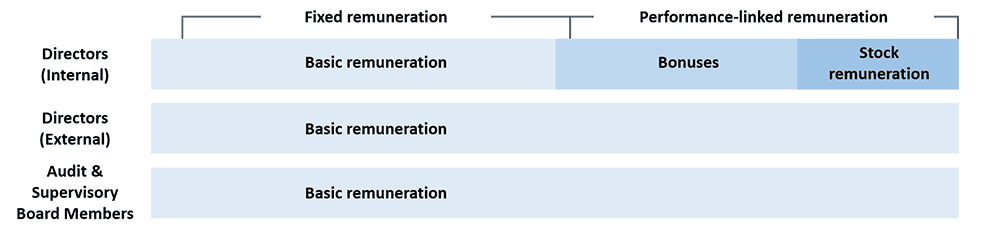
![]()
Composition of Remuneration for the Representative Director and Chairman (Group CEO) and the Representative Director and President (Group COO)
![]()
-
Process for Determining Remuneration
At the General Meeting of Shareholders, separate resolutions for officer remuneration for Directors and Audit & Supervisory Board Members are determined and submitted to shareholders for approval. Each officer receives remuneration allocated within the total allowed for the corresponding officer classification. To ensure the objectivity and transparency of the officer remuneration system, the appropriateness and validity of the allocation to each Director are first discussed by the Nomination & Remuneration Committee, which is composed mainly of external officers. Using the results of these discussions as the premise for determining remuneration, the final decisions about individual remuneration are entrusted to the Representative Director and President by the Board of Directors. The Representative Director has the authority to determine the basic remuneration for each Director and the bonuses and stock remuneration based on results of operations of the business overseen by that Director. The Representative Director is given this authority because, as the executive who oversees all business management, this role is best suited for evaluating the business units managed by each Director. Remuneration of Audit & Supervisory Board Members is determined by the mutual agreement of these members.

Risk Management
To ensure business continuity and stable growth in the future, the Group has established the Risk Management Promotion Committee as a company-wide, cross-functional organization that comprehensively identifies risks and conducts qualitative analysis and evaluation. Specifically, risks are identified through questionnaires completed by the responsible personnel at its subsidiaries and departments. These risks are then prioritized based on two evaluation criteria: the potential impact (significance and scale) on the Company’s performance, including its management results, if they were to materialize; and the likelihood of their materialization.
Necessary actions are taken to address risks that could have a substantial impact.
Responding to Risks
| Risk Categories | Main Risks | Main Measures |
|---|---|---|
| Strategy Risk | Price competition Damage to brand value Decrease in market share |
The Company conducts product development, marketing and sales taking into account changes in market needs and customer preferences, and works to maintain and improve its competitive advantage by adding functional and emotional value to achieve differentiation. |
| Entry of new competitors Decrease in market share due to entrants from other industries and expansion into new channels by competitors |
In addition to constantly keeping track of information from its business partners and sales and marketing sites, the Company works to remain abreast of market information in a timely manner through regular consumer surveys. It also strategically pursues unique value through active cooperation with companies in other industries and linkages with external resources and technologies. | |
| Research and development delays Decrease in brand competitiveness Decline in innovation |
At the Advanced Technology Laboratory, the Company conduct basic and applied research using data science, while our branch in Lyon, France is engaged in cutting-edge dermatological research. The Company is also actively engaged in open innovation using external resources. | |
| Changes in consumer preferences Decrease in brand value due to deviation from consumer needs |
In addition to regularly conducting market surveys to properly obtain consumer information and conducting consumer surveys in Japan, the Company is also stepping up its surveys in countries outside Japan where it does business. It is also actively deploying digital technologies in pursuit of new customer experiences. | |
| Delays in responding to climate change Decline in business profitability due to inability to accommodate a decarbonized society |
The Company is proactively engaged in various efforts to mitigate climate change, including reducing greenhouse gases. It also strives to respond to international trends, such as disclosing information about risks and opportunities posed to business by climate change, in line with the recommendations of the Task Force on Climate-related Financial Disclosures (TCFD). https://koseholdings.co.jp/en/sustainability/environment/tcfd/ |
|
| Delayed response to biodiversity and water resource issues Decreased business continuity due to inability to respond to the degradation of natural capital and rising water risks |
The Company is identifying its dependencies and impacts on natural capital and is conducting analyses of risks and opportunities related to biodiversity and water resources. Furthermore, the Company is enhancing information disclosure based on the TNFD recommendations and promoting initiatives to achieve "Nature Positive" outcomes, reflecting these efforts in its sustainability strategy. https://koseholdings.co.jp/en/sustainability/environment/biodiversity/ | |
| Delays in addressing human rights issues and employment discrimination Decline in business profitability and reputation due to inability to address human rights risk |
In accordance with international standards such as the UN Guiding Principles on Business and Human Rights, the Company has formulated the KOSÉ Group Human Rights Policy. Under the supervision of the Board of Directors, it conducts an annual assessment of human rights risks at each stage of our supply chain, within the Group, and among consumers and society. After taking appropriate actions, we proactively disclose the results. Furthermore, from a compliance perspective, we conduct education activities to raise awareness of all forms of harassment and individual human rights issues. We have also established internal and external contact points for consultation. https://koseholdings.co.jp/en/sustainability/rights/hrdd/ |
|
| Business / Financial Risk | Increase in raw material prices Decline in profitability due to increased raw material prices |
The Company conducts procurement globally to minimize market risk. It also strives to procure necessary raw materials and outsourced products at reasonable prices in a timely manner while maintaining good relationships with suppliers. The Company has also established the Cost and Inventory Reduction Promotion Committee, which is working to maintain reasonable costs and secure inventories. |
| Discontinuation of raw material supply Obstacles to stable product supply Impact on sales and profit margins Decline in the Company’s creditworthiness |
||
| Political / Economic Risk | Changes in legal regulations and responses Demand fluctuation risk Impact on product exports |
The Company collects information on a daily basis regarding legal regulations related to its business. In product development, the Company reviews raw material standards in light of changes in legal regulations and responds by effectively utilizing domestic and overseas information networks to secure alternative raw materials. https://koseholdings.co.jp/en/sustainability/scm/ |
| Abrupt changes in the political situation in countries and regions where the Company does business Impact on sales due to fluctuations in demand Employee safety risk |
The Company takes necessary measures by enhancing cooperation with overseas affiliates and business partners to collect information on economic, political, and social conditions in each country and region in a timely fashion. | |
| Accident / Disaster Risk | Natural disasters (earthquakes, volcanic eruptions, tsunamis, etc.) Delays or interruptions of business activities due to suspension of production and logistics functions |
In the event of a disaster or the spread of an infectious disease, the Company will immediately establish an emergency headquarters to discuss and implement countermeasures. To prepare for disasters, the Company takes various steps, such as creating crisis management rules, disaster preparedness manuals, and business continuity plans (BCP). It also works to confirm workplace safety, rectify deficiencies, and secure alternative means in the event of an emergency. |
| Spread of highly virulent infectious disease Delays or interruption of business activities including production, supply, and sales |
||
| Personnel / Labor Risk | Securing outstanding talent Decline in corporate competitiveness |
The Company works to create an environment in which diverse human resources can play an active role. In its recruitment activities, the Company secures expert human resources through hiring by job type and outstanding talent through revision of the Beauty Consultant compensation system. |
| Legal Violation / Indemnification Risk | Problems related to product accidents Reputation loss among customers and decline in corporate brand value due to serious product accidents |
The Company prioritizes delivering safe and reliable products to its customers in all its manufacturing efforts. It has articulated the KOSÉ Group’s commitment to quality as its Quality Policy, under which it has established a Quality Policy Message and Five Activity Declarations that it upholds in the Group's daily activities. |
| Leaks of confidential or personal information Reputation loss and compensation for damage due to information leaks |
In addition to raising awareness of compliance through the Compliance Promotion Committee, the Company has established a Personal Information Management Committee based on laws and guidelines of the Ministry of Economy, Trade and Industry, and is working to build a comprehensive management system by strengthening information security. Furthermore, the Company holds regular training, shares information on risks, and conducts thorough prevention measures. |
Business Continuity Management
Business continuity plans (BCP) have been established to minimize the impact of crises that could significantly affect the operations of the Group, and to resume and continue operations within an acceptable timeframe and at an appropriate level.
For business continuity management, the BCP of each group company and business unit, which is reviewed annually, is maintained through activities such as education*, training, emergency response, and other related initiatives.
All the Group companies periodically conduct assessments to ensure that business continuity activities are suitable based on current social trends, organizational changes, business strategies, results of education programs and drills, and other considerations.
*An annual education program for management personnel to reinforce their awareness of the importance of BCP.
Business Continuity Plan
-
Basic Policy for BCP
The Group established the following basic policy when the BCP was initiated.
- a) The highest priority is ensuring the safety of people and assisting people who have been injured.
- b) Activities should minimize the impact of damages, quickly reduce disruptions caused by a crisis, and protect the assets of affected companies.
- c) Quickly receive, analyze and share accurate information and supply stakeholders with explanations and other information in a timely manner.
- d) Fulfill corporate responsibility as a member of society by taking actions for business continuity and the rapid recovery of communities and other business activities.
To achieve this, implement the BCP for designated crises and take all actions possible for the stable continuation of priority businesses and key business processes.
-
Current BCP Activities
A designated crisis for the Group BCP is an event that can damage the assets of the Group or significantly interrupt or disrupt business operations (the all-hazards approach).
Each Group company determines designated events covered by their BCP based on the business and regional characteristics of the company. The impact of an interruption of business operations is assessed by evaluating its effects on the company, customers, suppliers, the community and others. This process is used to identify priority businesses and key business processes. For the resumption of these priority businesses and processes, each company establishes a target timeframe needed to resume operations and responds to crises with the aim of completing all necessary activities to restore operations by this established target. -
Crisis Response
When a crisis covered by the BCP occurs, all the Group companies have a system in place to establish an emergency response headquarters at a level that reflects the severity of the crisis.
Basic Policy on Internal Control Systems
The Company has the following internal control structure to ensure that business management is conducted properly. The Company strives to enhance its internal control structure covering all the Group executives and employees and ensure its effectiveness.
-
System for ensuring that Directors and employees perform their duties in compliance with laws and regulations and the Articles of Incorporation
The Board of Directors meetings are held on a regular basis and additionally as needed in accordance with laws and regulations, the Articles of Incorporation, the Board of Directors Regulations, Regulations for Making Decisions and other guidelines. The Directors supervise each other regarding the performance of their duties. The Directors perform their respective duties in accordance with resolutions approved by the Board of Directors and internal regulations.
Audit & Supervisory Board Members perform audits in accordance with the Audit & Supervisory Board Regulations and Audit & Supervisory Board Member Audit Standards to confirm that Directors are performing their duties properly.
The Audit Group performs internal audits of overall business management based on the Internal Audit Regulations.
Audits are performed on a regular basis to verify compliance with laws and regulations, the Articles of Incorporation and internal regulations and the suitability of procedures and other activities for conducting business management. Results of internal audits are reported to the Representative Directors, Audit & Supervisory Board Members and the Board of Directors.
At the Group, “compliance” encompasses compliance with laws and regulations as well as behavior consistent with social ethics based on our code of conduct, “Mind to follow the right path.” This scope of compliance includes adherence to ethical behavior as defined in the KOSÉ Group Action Guidelines.
The compliance structure and compliance activities are based on Risk Management and Compliance Regulations. To ensure effective oversight, compliance-related activities are reported regularly to the Board of Directors for thorough review and discussions. Reports are submitted by the Risk Management and Compliance Committee, which is chaired by the Representative Director and President and consists mainly of individuals who manage business units.
The Compliance Promotion Committee holds seminars and other training programs for Directors and employees.
The Company has internal and external channels for reporting problems. This structure provides a framework for responding to reports from Directors and employees and performing consultations. -
System for the storage and management of information about the performance of Directors’ duties
Minutes of shareholders meetings and Board of Directors meetings, and important documents and information involving decisions made about business management are stored and managed properly as stipulated in laws and regulations and internal regulations. Directors and Audit & Supervisory Board Members can see these materials at any time.
The Company has a department that is responsible for the timely disclosure of important information and other disclosure activities. In addition, Directors collect information that should be disclosed in a rapid and comprehensive manner and then, in accordance with laws, regulations and other guidelines, this information is disclosed in an appropriate and timely manner. -
Regulations and systems for the risk management of losses for the Company
There are many sources of risk that pose a threat to the sustainable development, particularly problems involving compliance, product quality, information security, markets, natural disasters and other potential risks. To be prepared to respond to these problems, the Company has an effective risk management framework that includes Risk Management and Compliance Regulations and a Risk Management Promotion Committee.
The General Manager of the General Administration Group, who chairs the Risk Management Promotion Committee, designates business units that are risk owners based on the significance of individual risk factors.
These units are responsible for determining countermeasures for these risk factors, monitoring these measures and submitting periodic reports to the Risk Management Promotion Committee, which consists primarily of individuals who manage business units.
The Company has established a framework based on the Crisis Management Regulations for minimizing as much as possible, the damages and other losses that may arise in the event of a significant crisis or other issues. -
System for ensuring that Directors perform their duties efficiently
The scope of duties, authority and responsibilities of Directors are clearly defined and the Independent External Directors/Audit & Supervisory Board Members provide supervision and oversight. This results in the proper and efficient management of the Group by the Directors.
The Board of Directors Regulations designate important items that should be submitted for decisions or as reports to the Directors for the purpose of operating the Board of Directors efficiently. In addition, the Company has a Management Committee for the purpose of making decisions about business management efficiently. -
System for ensuring the suitability of business operations of the corporate group consisting of the Company and its subsidiaries
The Company assigns personnel responsible for the overall management of its subsidiaries. Also, as a rule, the Company sends Directors and Audit & Supervisory Board Members to these subsidiaries in order to ensure thorough management based on self-responsibility through appropriate delegation of authority.
The personnel responsible for the overall management of these subsidiaries requires all subsidiaries to submit reports about their operations, financial condition and other important items.
In addition, internal audits by the Audit Group include all of the activities of subsidiaries. In accordance with Internal Audit Regulations, the Audit Group performs periodic internal audits regarding compliance with laws and regulations, the Articles of Incorporation and internal regulations and the suitability of procedures and other activities for conducting business management. -
System for ensuring the reliability of financial information
To ensure the reliability of financial information, the Company establishes and operates internal controls related to financial reporting as prescribed in the Financial Instruments and Exchange Act and other legislation, and evaluates and reports on the effectiveness of these controls on an ongoing basis. Furthermore, the Company quickly takes actions when revisions or improvements are needed for internal controls.
-
System for reporting from Directors or employees to Audit & Supervisory Board Members and for other reporting to Audit & Supervisory Board Members
Directors submit periodic reports about the performance of their duties to Audit & Supervisory Board Members. In addition, executives and managers immediately report to Audit & Supervisory Board Members any serious violation of a law or regulation at the Company or its subsidiaries or any other serious matter involving compliance. The Company has a system that allows employees to submit directly to Audit & Supervisory Board Members any information about matters that may cause a significant loss to the Company.
-
System for ensuring no negative consequences for individuals who submit reports to Audit & Supervisory Board Members
The Company has regulations concerning compliance and internal reports. In accordance with these regulations, when a Director or employee of the Group makes a compliance violation report, there will be no negative consequences for that individual because of the submission of the report. In addition, information about the individual who submits the report and the contents of the report are handled in accordance with strict rules.
-
Other systems for ensuring that audits by the Audit & Supervisory Board Members are performed effectively
The Audit Group and Audit & Supervisory Board Members exchange information periodically and work together in other ways concerning formulation of an internal auditing plan for each fiscal year, internal audit results and other matters.
The Audit Group and Audit & Supervisory Board Members monitor and verify the status of implementation and operation of these systems.